
The first five minutes of a new account decide most of what follows. A registration form takes roughly 3 minutes, identity checks open straight after it, and the cashier appears before a single limit has been set. This page reverses that order. It puts the licence position for Great Britain first, then the account limits, then the payment routes, and only then the sign-up sequence itself.
Eight checks follow below, in the order a careful punter runs them before handing over a passport scan.
Each check ends with a way to repeat it at the primary source rather than taking any figure on trust.

This InkyBet review UK edition records what was inspected on 26 September 2026, and what was deliberately left alone. Nothing below rests on a figure that could not be traced to a regulator, a payment scheme or an operator screen.
The checks ran on a Pixel 8a handset on Android 15 and on a desktop browser at 1920x1080, both from a Great Britain connection, on 26 September 2026.
Five things were examined. The Gambling Commission public register was searched by trading name. The cluster of domains carrying the brand name was compared for footer content, currency and language. The visible terms were compared across those domains for licence number, licence holder and bonus structure. The registration surface was opened as far as the point of document upload. Published support routes were recorded.
That comparison produced the central finding of this page. At least six separate domains carry the brand name, and their figures conflict on licence number, licence holder, founding year and bonus size. Most are written for the Netherlands, and few address InkyBet Casino UK conditions at all.
Current addresses are published on the operator's official channel, and no domain is named here because none could be confirmed as operator property.
No funded test deposit was placed. Placing one would mean staking money with an operator that holds no Great Britain licence, and the resulting timings would still be a single unrepeatable sample.
Payment timings in the table further down are therefore given as payment-rail norms for Great Britain, sourced by rail and labelled as such. Any figure specific to this brand is marked as unverified rather than estimated.
The short answer sits in one line. No operating licence for this brand was found on the Gambling Commission public register on 26 September 2026, and a Commission remote operating licence is mandatory for anyone offering remote gambling to, or advertising to, consumers in Great Britain.
This site is an independent information resource and earns commission when a reader opens an account through it. That relationship is disclosed here, at the point where it matters, rather than buried at the foot of the page.
The register is the only check that settles whether InkyBet is legit under Great Britain law. It is searchable by trading name, by licensee name and by account number, and the regulator maintains it rather than any operator.
Repeating the search takes under a minute. Open the Gambling Commission site, choose the public register of gambling businesses, select the full register, and type the trading name into the search field. A licensed operator appears with its activities listed one by one, covering remote casino, remote general betting on real events, remote bingo and remote gambling software.
Third-party pages present the brand as holding an Anjouan business-to-consumer permit issued in the Union of the Comoros. Two different licence numbers and two different holding companies circulate, one registered in Costa Rica and one in Anjouan, and the two accounts cannot both be correct.
Neither version could be checked against the Anjouan register or against an InkyBet official footer, so no number and no company name are reproduced here. Great Britain is in any case a restricted market under Anjouan licensing, which means such a permit carries no authority to serve players in this country.
Great Britain operates no national ISP blocking list, so an unlicensed site stays reachable from a British connection. Reachability is not permission, and it is the most common reason readers assume InkyBet is safe while the licence question is still open.
The Commission disrupts the unlicensed market by other means: payment-provider referrals, with the first referral to Visa made in January 2025, more than 750 cease-and-desist and disruption notices, more than 78,000 URLs referred to search engines, hosting takedowns, test purchasing and prosecution under the Gambling Act 2005. Current totals sit on the regulator's enforcement pages.
Two query patterns bring readers to pages like this one, and both deserve a straight answer. One asks for a system that beats the games. The other repeats an InkyBet scam allegation picked up second hand.
Slot outcomes come from a random number generator that selects a result the moment the spin is requested. Each spin is independent, so a game that has paid nothing for 200 rounds carries exactly the same odds on round 201 as it carried on round 1.
Predictor apps and so-called cracking tools cannot read that generator, and no sequence of past results narrows the next one. Provably fair systems, used mainly on crypto-native titles, work differently again. They publish a server seed hash before the round and let the player confirm afterwards that the result was not altered, which is verification after the event rather than foresight before it.
Return to player is the only number that describes long-run behaviour, and the studio that built the title publishes it in the game rules panel. On the InkyBet betting side the equivalent is the bookmaker margin folded into every price, which is why an acca of five selections carries five margins rather than one.
An InkyBet scam claim is worth reading only when it names the date, the payment method, the amount and the reason given for the refusal. Claims missing all four describe a feeling, not an event.
The more useful test is the one in the section above. An operator on the Commission register can be escalated to a named alternative dispute resolution body and, in the last resort, to the regulator. An operator absent from that register offers no such route, whatever any page says about whether InkyBet is safe.
Limits are the one part of an account a player controls completely, and they cost nothing to set. The table below lists the standard Great Britain control set, the value each one takes, and where it sits in an account menu.
| Limit type | Value | How to change it |
|---|---|---|
| Deposit limit | Player-set, daily, weekly or monthly | Account menu, responsible gambling area, deposit limit |
| Stake limit on online slots | £5 per spin for ages 25 and over from 9 April 2025, £2 for ages 18 to 24 from 21 May 2025 on Great Britain licensed sites | Account menu, responsible gambling area, stake or loss limit |
| Session time limit | Player-set, commonly 15 to 60 minutes | Account menu, responsible gambling area, session limit |
| Reality check | Player-set reminder interval | Account menu, responsible gambling area, reality check |
| Self-exclusion | Player-set period, then irreversible for its duration | Account menu, responsible gambling area, self-exclusion |
| Minimum age | 18, not changeable | Verified before play, documents required |
| Withdrawal limit | Not published at a verifiable source for this brand | Cashier, withdrawal screen, limits panel |
Two points carry beyond the table. The £5 and £2 caps apply to online slots only and not to roulette or blackjack, and they are conditions on Great Britain licences rather than voluntary settings, so InkyBet slots play outside that regime carries no such statutory ceiling. Where a tool is missing from the account menu, or carries a different label, that absence is itself a finding worth raising with support before depositing.
Deposit routes in Great Britain are dominated by debit cards, Apple Pay and Open Banking, and payout speed to a debit card is what most readers actually want to know. The table below gives the norms for each payment rail in GBP, not figures taken from any brand page.
| Method | Minimum | Time | Fee |
|---|---|---|---|
| Visa Debit and Mastercard Debit | £5 to £10 on most GB sites | Deposit instant, payout commonly same day to 3 working days | None charged by GB licensed operators |
| Apple Pay | £10 typical | Deposit instant, no payout route, funds return to the linked debit card | None |
| Google Pay | £10 typical | Deposit instant, no payout route | None |
| PayPal | £5 to £10 | Deposit instant, payout commonly within 24 hours | None |
| Open Banking transfer | £10 typical | Deposit instant, payout over Faster Payments, often inside 2 hours | None |
| Bank transfer over Faster Payments | £10 typical | Seconds to 2 hours, up to 1 working day at the outer edge | None |
| Paysafecard | £5 to £10 | Deposit instant, no payout route | None |
| Skrill and Neteller | £10 typical | Deposit instant, payout commonly within 24 hours | None from the operator, the wallet may charge |
| Credit card | Not permitted | Not permitted | Banned for Great Britain gambling since 14 April 2020 |
Those windows describe the rails, not this brand. The operator's own minimums, payout windows and any fees are not published at a source that could be verified, so they must be read in the cashier before the first top up, alongside the closed-loop rule that returns money to the depositing method. Balances on the InkyBet betting and casino sides normally share one cashier, so a single verified card usually serves both.
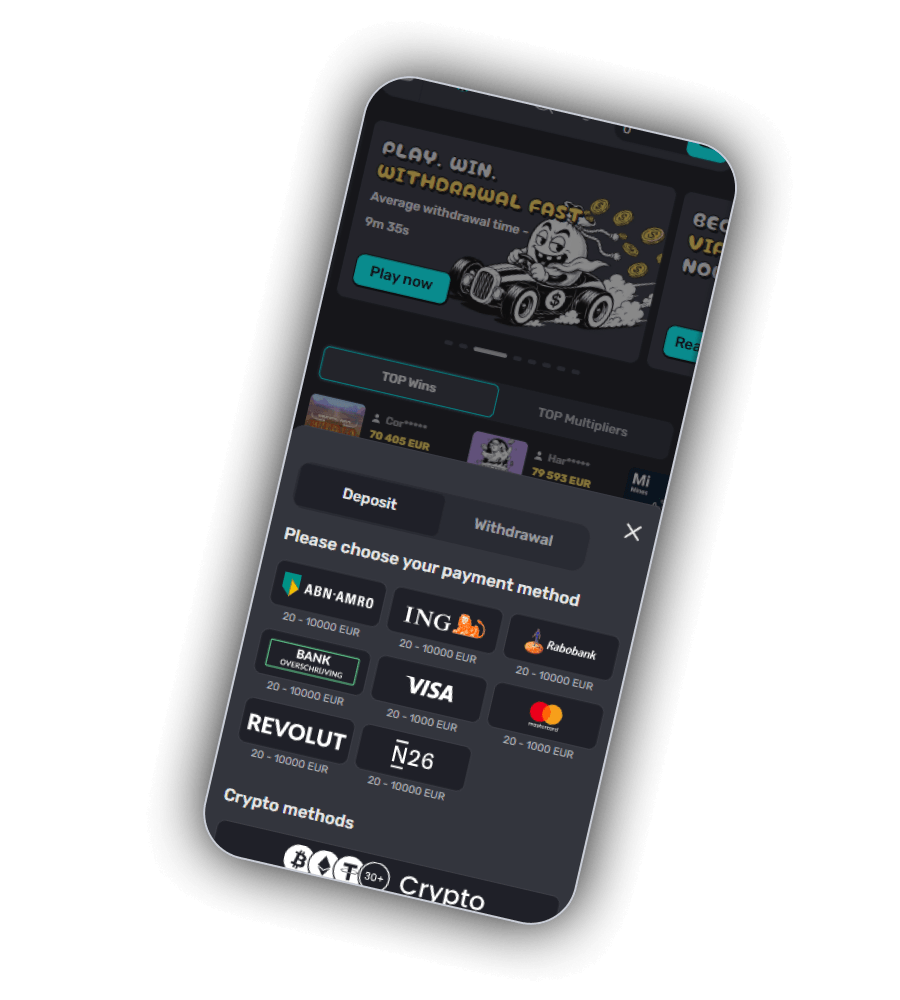
The ban took effect on 14 April 2020 and covers every form of remote gambling, with National Lottery tickets the single exception. It reaches further than the plastic itself.
An operator accepting an e-wallet payment must satisfy itself that the balance was not loaded from a credit card, so routing a credit line through a wallet does not work either. Any page implying that InkyBet online play can be funded on credit is describing something the Great Britain rules do not allow.
Sign-up is short, and the friction arrives afterwards at verification. The sequence below is the standard order for InkyBet registration and for comparable platforms.
Completing step 6 before step 7 is what separates a controlled account from a reactive one. Readers who want the lobby itself can read the full platform overview and what the lobby holds, which covers InkyBet Casino live dealer rooms and the sportsbook separately.
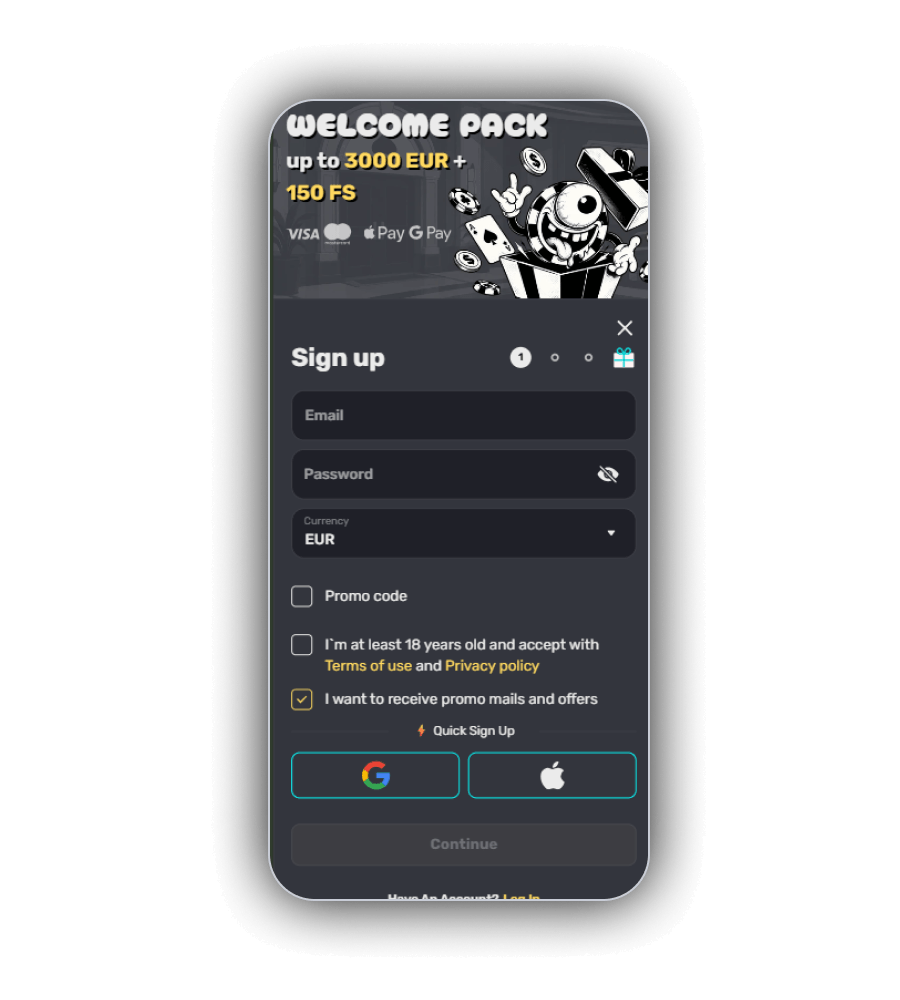
Identity checks fail on mismatches far more often than on missing paperwork. Four items clear most reviews.
Reviews on comparable platforms commonly close within 24 to 72 hours once all four are legible. An InkyBet betting account draws on the same verification file as the casino side, so the documents are submitted once. Anyone already holding an account and locked out should read how account access and password recovery work, which handles InkyBet login problems separately from sign-up.
Headline bonus figures move constantly, and Remote Gaming Duty rose from 21% to 40% on 1 April 2026, which compresses what operators can afford to offer. The table below lists the terms that decide whether an offer is worth taking, with the honest status of each for this brand.
| Term | Value |
|---|---|
| Welcome offer | Not verified at source, read it in the cashier promotions screen |
| Wagering requirement | Not verified at source, conflicting multiples circulate on unaffiliated pages |
| Minimum qualifying deposit | Not verified at source, check the cashier before opting in |
| Bonus expiry | Not verified at source, commonly the single term that voids a balance |
| Maximum bet while wagering | Not verified at source, a breach usually forfeits the bonus funds |
| Game weighting | Not verified at source, table games typically contribute far less than slots |
| Where the binding terms live | Cashier, promotions screen, full terms, before the opt-in box is ticked |
| Great Britain duty context | Remote Gaming Duty 40% from 1 April 2026, so older bonus figures are stale |
A bonus that cannot be read in full before the opt-in is a bonus that cannot be priced. Declining the offer and playing with cash keeps the balance withdrawable at any point.
A worked case makes the rules concrete. A player registers under the name on their passport, tops up £20 with a Visa Debit card held in a partner's name, plays through, and requests £140 out to a different card entirely.
Three rules fire at once. The payment instrument does not match the account holder, the withdrawal is not returning to the depositing method, and identity checks had not cleared before the request. Under the standard closed-loop and name-match rules the payout is held rather than cancelled, and it releases once the original card is verified in the account holder's own name.
Protection has two layers, and only one of them is under the operator's control. The account tools are configurable in minutes, while the statutory layer depends entirely on the licence question answered further up this page.
Five controls make up the standard set: deposit limit, stake limit, session time limit, self-exclusion and reality check. Each sits in the responsible gambling area of the account menu, and increases to a limit normally take effect only after a cooling-off period, while decreases apply immediately.
A reality check set to 30 minutes interrupts play with an on-screen summary of time and net position. That single setting does more for a bankroll than any staking pattern.
GAMSTOP is the single national self-exclusion register for Great Britain, run by National Online Self-Exclusion Scheme Ltd. Participation has been a licence condition for every Great Britain licensed online operator since 31 March 2020, and self-excluded lists are refreshed at least every 24 hours.
The limit matters here. GAMSTOP binds licensed operators only, so a registration there does not reach a site operating outside that regime. Anyone relying on it should confirm register status before opening an account.
Support in Great Britain is free and needs no referral. Four routes cover most needs.
Gambling is restricted to adults aged 18 and over, and participation by anyone under that age is prohibited. Nothing on this page is addressed to minors.
Players in the United Kingdom pay no tax on gambling winnings, and there is nothing to declare on a self-assessment return. Player-side betting duty was abolished in 2001.
The charge falls on operators instead. Remote Gaming Duty is 40% from 1 April 2026, General Betting Duty is 15% with a remote rate of 25% from 1 April 2027 on remote betting other than bets on UK horseracing, which stays at 15%, and Bingo Duty was abolished from 1 April 2026. None of that is deducted from a player's balance.
Open the account with a deposit limit and a session time limit already in place.
Two named people stand behind the material above, with different responsibilities.
Author: Nadine Brocklehurst, payments and onboarding editor. Answerable for the registration sequence, the verification checklist, the payment-rail timings and the worked refusal case.
Reviewer: Iwan Tresidder, regulatory reviewer. Answerable for the register search, the licence and advertising position, the duty rates and the responsible-gambling references. The review closed on 26 September 2026.
Published 26 September 2026. Last updated 26 September 2026. Next review 26 March 2027.
Traffic from this page goes to InkyBet Casino. No Great Britain operating licence was located for the brand on the Gambling Commission register, no licence number is published here because none could be verified against a regulator or an operator-controlled footer, and no registered address could be confirmed for the same reason. InkyBet customer support is reachable through the contact routes published on the operator's own site.
This site takes no deposits, does not reproduce the operator's interface and collects no player data. Corrections reach the editorial desk through the Contacts entry in the site footer.
Every figure above can be checked at a primary source, named here with its location.
Any figure that could not be traced to one of those ten sources was left out of this page rather than estimated.
Six objections come up repeatedly before a first deposit, and each is answered below from the register, the statute or the payment rails.
No entry for the brand was found on the Commission's public register of gambling businesses on 26 September 2026, and a Commission remote operating licence is mandatory to offer remote gambling to consumers in Great Britain. The register can be searched by trading name in under a minute, which is the check worth running before any document is uploaded. Some searchers type inky bet as two words, and the register search handles either spelling.
GAMSTOP has been a licence condition for Great Britain licensed online operators since 31 March 2020, and its self-excluded lists refresh at least every 24 hours. Because the scheme binds licensed operators only, a GAMSTOP registration does not reach a platform operating outside that licensing regime. Anyone relying on self-exclusion should confirm register status first.
Four items cover most reviews: a photo identity document, a proof of address dated within 3 months, proof of the payment card with the middle digits obscured, and a source of funds document where deposits build quickly. On comparable platforms a complete set commonly clears in 24 to 72 hours. Uploading at sign-up rather than at the first withdrawal removes the usual delay.
No. Credit cards have been banned for gambling in Great Britain since 14 April 2020, across every remote product, with National Lottery tickets the only exception. The ban extends to e-wallet balances loaded from a credit card, so routing a credit line through a wallet is blocked as well. Debit cards, Apple Pay, Google Pay and Open Banking transfers all remain available and deposit instantly.
Four causes account for most holds: an account that has not cleared identity checks, a name on the payment instrument that does not match the account holder, an unfinished wagering requirement on bonus funds, and a payout requested to a method other than the one used to deposit. The closed-loop rule normally holds the money rather than cancelling it, and it releases once the mismatch is corrected. Reading the cashier limits panel before the first top up prevents the third and fourth.
No. Winnings are not treated as taxable income or as a chargeable gain, nothing is withheld at source, and nothing goes on a self-assessment return. Player-side betting duty ended in 2001, and the charge now sits with operators through Remote Gaming Duty at 40% and General Betting Duty at 15%, rising to 25% on most remote betting from 1 April 2027. Those are operator liabilities and are never deducted from a player's balance.
This site takes no deposits, does not reproduce the operator's interface and collects no player data, and it earns commission when a reader opens an account through a link on it. 18+ only. Gamble responsibly.